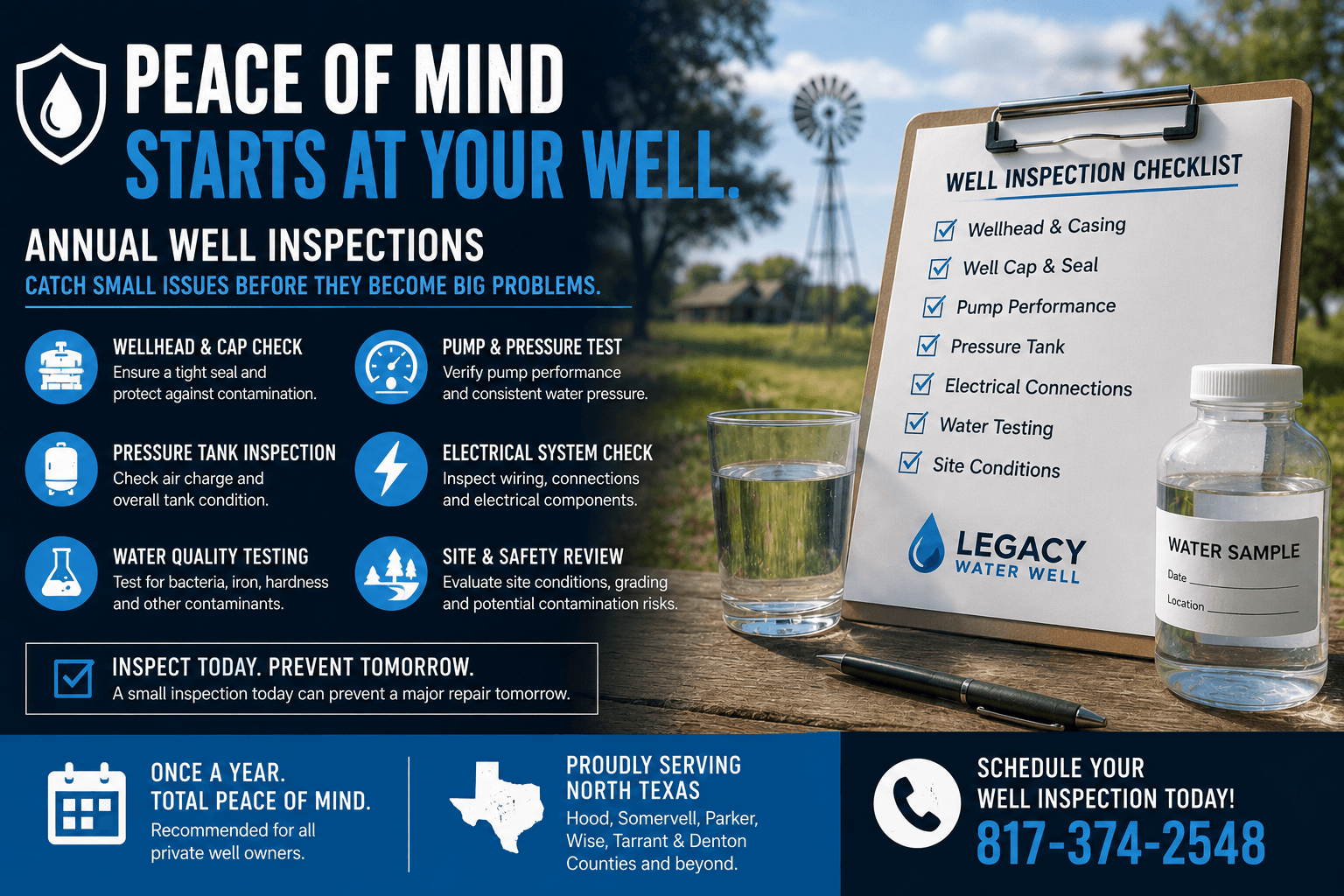
An annual well inspection is the single best way to catch a failing pump, a cracked well cap, or contamination risk before it turns into a no-water emergency or a costly repair. Most well problems don't happen overnight — they build slowly, which is exactly why they're easy to miss without a yearly check.
What We Actually Check
A full inspection covers the wellhead and casing condition, the well cap seal (a common entry point for surface contamination if it's cracked or loose), pump performance and pressure, the pressure tank's air charge, visible wiring and electrical connections at the well, and a water sample for testing. We also look at site conditions — grading, nearby contamination sources, and anything that's changed since your last inspection.
Why This Matters More in North Texas
Wells drawing from the Trinity, Paluxy, and Woodbine formations can shift in output and water chemistry over time, especially through drought stretches or heavy rain events. An inspection catches those changes early — declining pressure, a rising sediment load, or a pump working harder than it used to — before they become an emergency call. Pair it with annual water testing for a complete picture of both the equipment and the water itself.
What We Do If We Find a Problem
Diagnosis first, always. If an inspection turns up a developing issue — a weakening pump, a tank losing its air charge, a compromised well cap — we explain exactly what we found and what your options are before recommending any repair. Most issues caught during an inspection are far less expensive to fix than the same issue caught during an emergency call months later.
The TCEQ recommends private well owners test and inspect their systems regularly since, unlike municipal water, no agency is doing it for you. See TCEQ's private well guidance for more on ongoing well owner responsibilities.
Serving Well Owners Across Hood County and Beyond
We provide annual well inspections for homeowners and agricultural properties throughout Granbury, Tolar, Lipan, and the rest of Hood and Somervell counties, plus our full North Texas service area. Ask about setting up a standing annual inspection so it's never something you have to remember to schedule.
Frequently Asked Questions
How often should a private well be inspected?
Once a year at minimum, or any time you notice a change in water pressure, taste, smell, or appearance.
What's the difference between an inspection and water testing?
An inspection checks the physical equipment — pump, casing, cap, wiring, pressure tank. Water testing checks the chemistry — bacteria, iron, hardness, and other contaminants. We recommend both together annually.
How long does a well inspection take?
Most residential inspections take under an hour, depending on well depth and site access.
What if the inspection finds a problem I didn't know about?
We'll walk you through exactly what we found, what caused it, and your repair options with upfront pricing — no pressure to decide on the spot.
Do I need an inspection before buying a property with a well?
Yes — a pre-purchase well inspection is one of the most valuable checks you can do before closing on a rural or acreage property.
Don't wait for a problem to find you. Schedule your well inspection → or call 817-374-2548.