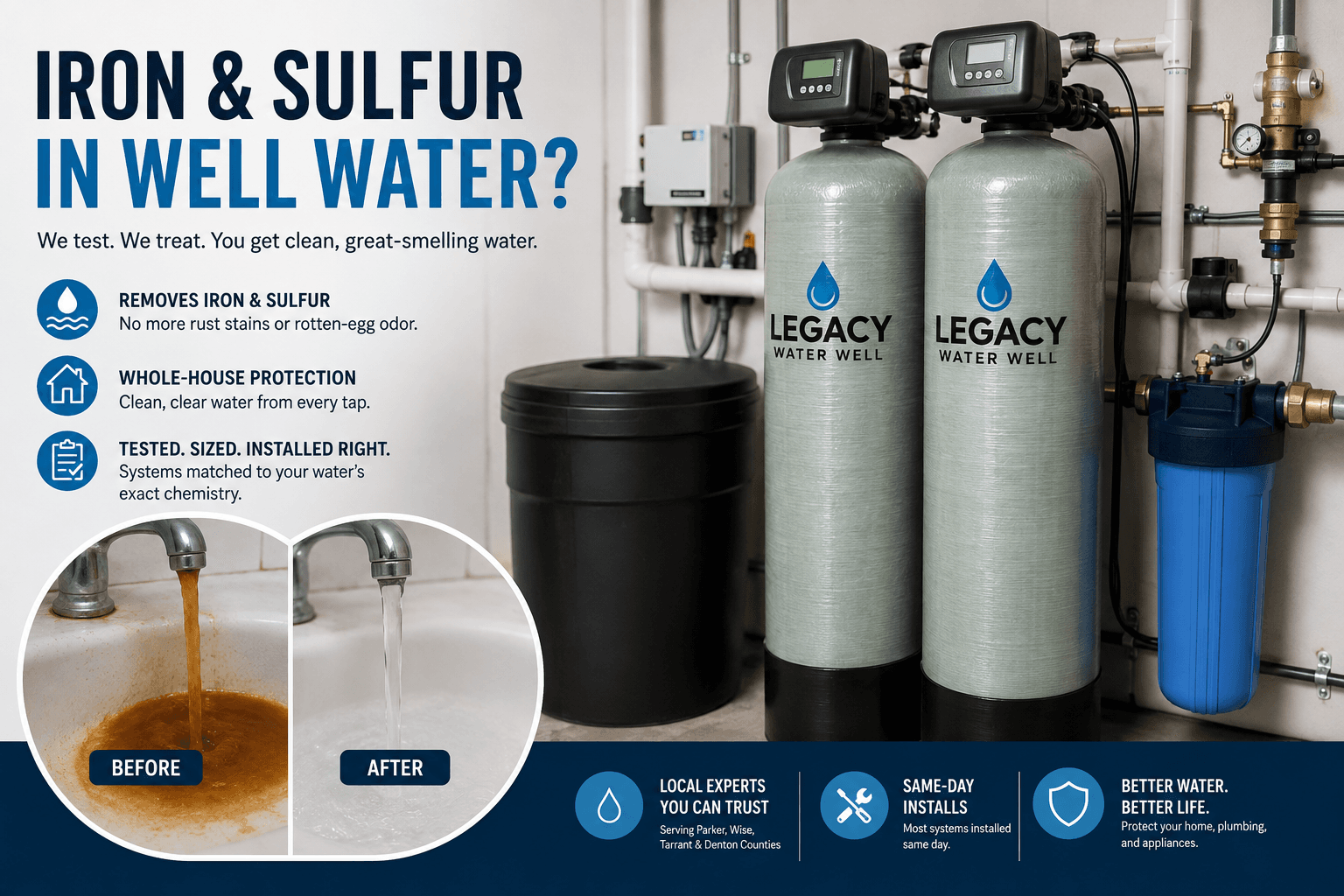
Rotten-egg odor and rust-colored water are two of the most common complaints we hear from well owners across Parker and Wise counties, and both usually trace back to the same culprits: dissolved iron and hydrogen sulfide gas naturally present in North Texas groundwater. The fix isn't a bigger pump or a new well — it's the right iron and sulfur filtration system matched to your water's actual chemistry.
Why North Texas Wells Get Iron and Sulfur
Wells drawing from the Trinity and Paluxy formations often pick up dissolved minerals as water moves through rock layers underground. Iron shows up as rust-colored staining on sinks, tubs, and laundry, or a metallic taste. Sulfur (hydrogen sulfide gas) is the rotten-egg smell — most noticeable right when you turn on the tap or run hot water, since heat releases the gas faster. Neither one is usually a health hazard on its own, but both make water unpleasant to use and can damage plumbing and appliances over time.
How We Diagnose It Before Recommending Anything
We don't sell a filtration system off a phone call. We test your water first — iron content, sulfur levels, pH, and hardness — because the right system depends on the concentration, not just the symptom. Light iron staining might need a simple whole-house filter. Heavy iron with sulfur often calls for an air injection oxidizing system or a dedicated iron/sulfur media tank. If you haven't tested your water in the last year, that's the place to start — see our well water testing service for what's included.
What Fixes It (And What Doesn't)
A standard sediment filter won't touch dissolved iron or sulfur gas — those need oxidation or specialized media to work. Once we confirm the levels, we size a system that treats the whole house at the point of entry, so every tap, shower, and appliance gets clean water instead of just the kitchen sink. Parts for common system sizes are stocked on the truck, so most installs happen same-day once we've confirmed what your water needs.
The EPA notes that private well owners are responsible for their own water quality — there's no municipal treatment plant checking it for you. Testing annually and treating known issues like iron and sulfur is the best way to stay ahead of it. See the EPA's guide to protecting your home's water for more on private well responsibilities.
Serving Well Owners Across North Texas
We install and service iron and sulfur filtration systems for homeowners throughout Weatherford, Springtown, Aledo, and the rest of Parker County, plus Tarrant, Wise, and Denton counties. If you're not sure whether it's iron, sulfur, or both, we'll test it and tell you straight — no guessing, no upsell.
Frequently Asked Questions
Is rotten-egg smelling well water safe to drink?
Small amounts of hydrogen sulfide are usually not a health risk, but the smell and taste make water unpleasant, and high sulfur levels can indicate other water quality issues worth testing for.
Will a water softener remove iron and sulfur?
A standard softener may reduce very low levels of iron but isn't designed for sulfur gas or heavier iron concentrations. Those typically need a dedicated oxidizing or air injection system.
How much does an iron filtration system cost?
Cost depends on your water's iron and sulfur levels and the system size needed for your household. We test first and give you an upfront quote based on your actual water, not a generic estimate.
Can iron in well water damage my plumbing or appliances?
Yes — over time, iron buildup can clog pipes, water heaters, and fixtures, and stain sinks, tubs, and laundry. Treating it early protects the rest of your plumbing system.
How long does it take to install an iron/sulfur filtration system?
Most residential installs are completed in a single day once we've confirmed your water test results and the right system size.
Smell it before you see it? Let's find out what's really in your water. Request your free water assessment → or call 817-374-2548.