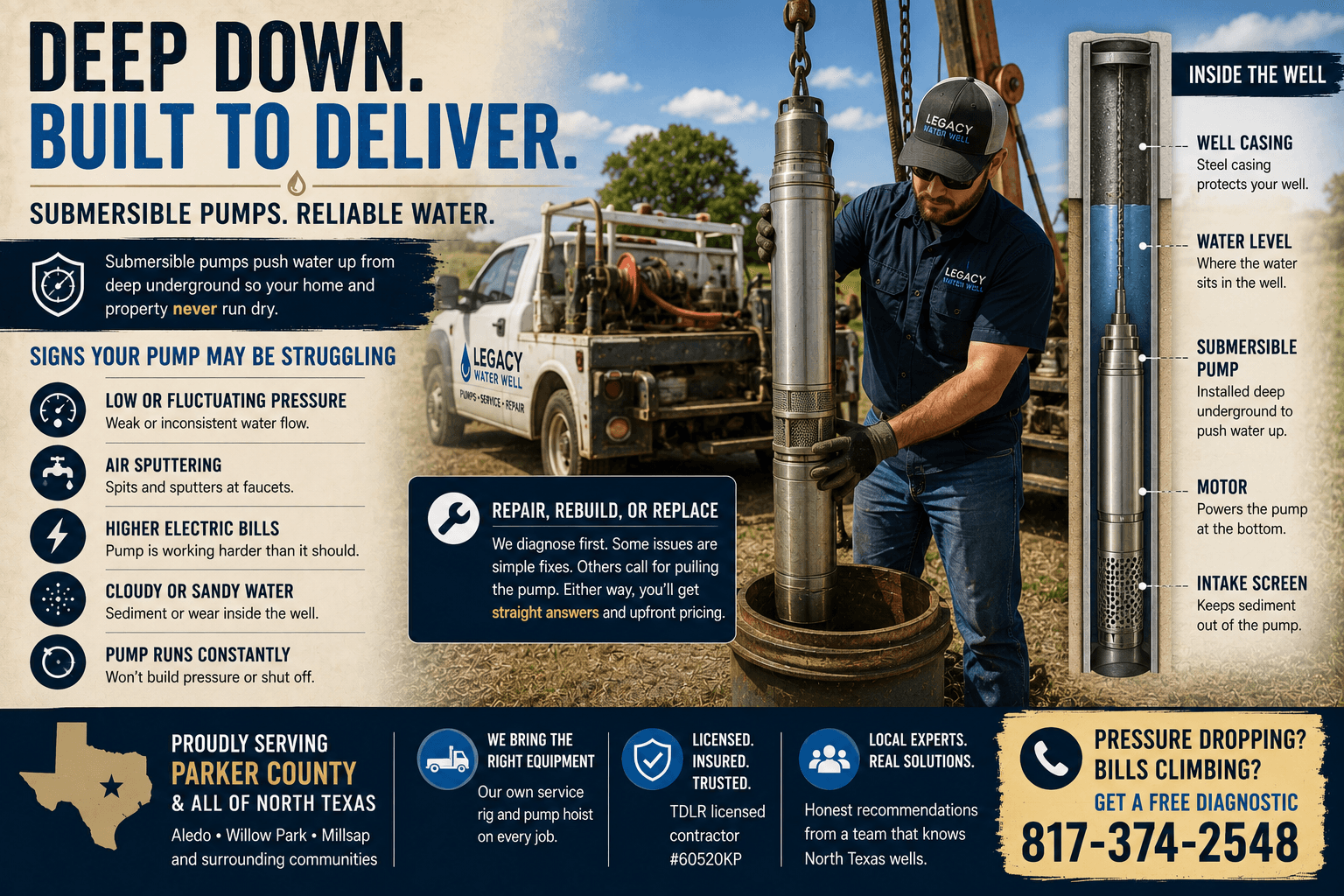
Most private wells in North Texas run on submersible pumps — sealed units that sit down inside the well casing, often hundreds of feet underground, and push water up to your home rather than pulling it from above. They're reliable and efficient, but because they're out of sight, most owners don't think about them until something goes wrong.
How a Submersible Pump Actually Works
Unlike a jet pump, which sits above ground and draws water up, a submersible pump is installed at or near the bottom of the well and pushes water upward under pressure. That design makes it well-suited to deeper wells, which describes most of the wells we service across the Trinity and Paluxy formations in North Texas. The tradeoff is that repairs or replacement require pulling the pump up from depth, which takes the right equipment — a service rig and pump hoist, not just a socket wrench.
Common Signs a Submersible Pump Is Struggling
Watch for reduced water pressure that doesn't improve, a pump that runs constantly without building pressure, air sputtering from faucets, noticeably higher electric bills without another explanation, or water that suddenly turns cloudy or sandy. Any of these can mean the pump is losing efficiency, the well is drawing down further than usual, or a component inside the pump is failing.
Repair, Rebuild, or Replace?
Not every issue means a new pump. Sometimes it's a bad capacitor, pressure switch, or wiring issue at the surface that never required pulling the pump at all — those are the same-day fixes we carry parts for on the truck. Other times, after 15-20+ years of service or motor failure, replacement is the more practical option. We pull the pump, inspect it, and tell you honestly which category your situation falls into. See our repair and replacement pages for typical cost ranges.
Because pulling a submersible pump involves real depth and weight, this isn't a DIY job. The Texas Department of Licensing and Regulation requires licensed contractors for well work — verify credentials through TDLR's water well program before hiring anyone to work on your well.
Serving Parker County and All of North Texas
We repair, rebuild, and replace submersible pumps for homeowners and agricultural properties throughout Aledo, Willow Park, Millsap, and the rest of Parker County, plus our full seven-county service area. We bring our own service rig and pump hoist to every job.
Frequently Asked Questions
How long do submersible well pumps typically last?
With good maintenance, most submersible pumps last 15-25 years, though well conditions, water chemistry, and how hard the pump works can shorten or extend that range.
Why is my electric bill higher with no other changes?
A struggling pump often draws more power to do the same job, which can show up as a rising electric bill before you notice any change in water flow.
Can a submersible pump be repaired, or does it always need replacing?
Many issues — capacitors, pressure switches, wiring — can be repaired without replacing the pump itself. We diagnose before recommending either option.
How deep are submersible pumps typically installed?
Depth varies by well and aquifer, often ranging from under 100 feet to several hundred feet depending on the formation and water table in your area.
What's the difference between a submersible and a jet pump?
A submersible pump sits down in the well and pushes water up; a jet pump sits above ground and draws water up. Submersible pumps are more common for deeper North Texas wells.
Pressure dropping or bills climbing for no clear reason? Get a free diagnostic → or call 817-374-2548.