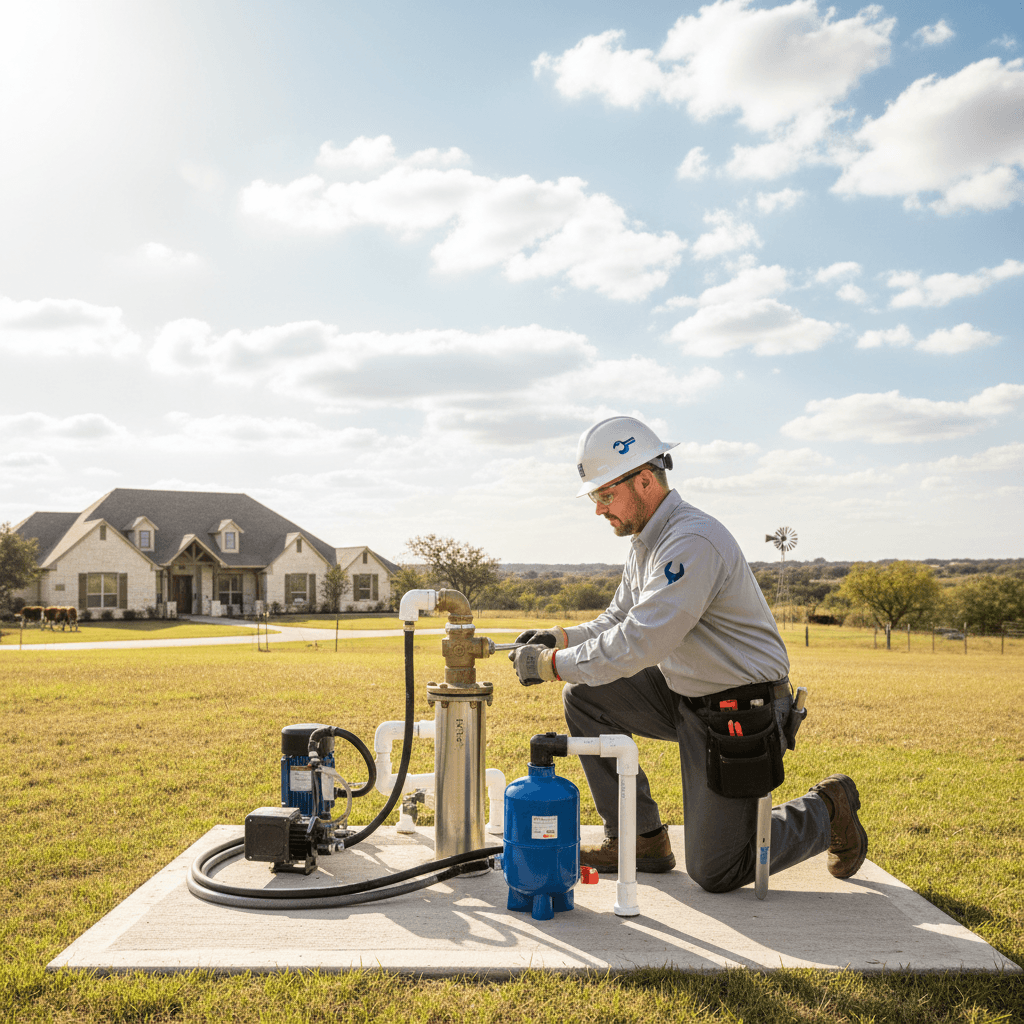
How Do You Care for Your Water Storage Tank?
A water storage tank — whether it's a pressure tank connected to your well pump or a large above-ground cistern for agricultural or backup water supply — is one of the hardest-working components on your property. Ignore it and you'll face expensive repairs or contamination. Take care of it and it'll last 20+ years without issues.
The EPA guidance on private well safety recommends inspecting and testing your water system annually, including pressure tanks and storage systems, to maintain water quality.
What Types of Water Storage Tanks Need Maintenance?
- Pressure tanks — small tanks connected to your well pump system that maintain water pressure in your home. Most homes have one.
- Above-ground storage tanks — large polyethylene or fiberglass tanks used for agricultural irrigation, livestock watering, or backup water supply. Common on rural properties throughout Parker and Wise County.
- Underground cisterns — buried storage tanks for rainwater collection or backup supply.
Each type has slightly different maintenance needs, but the core principles are the same: keep them clean, keep them sealed, and catch problems early.
How Do You Maintain a Pressure Tank?
Your pressure tank has an air bladder inside that maintains system pressure. Over time, the bladder can wear out or develop a leak, causing your well pump to short-cycle (turn on and off rapidly).
- Check the air pressure annually — with power off and system depressurized, use a tire gauge on the Schrader valve. It should be 3–5 PSI below your pump cut-in pressure (typically 25–27 PSI for a 30/50 system).
- Watch for short-cycling — if your pump kicks on every few seconds, the bladder is likely failing.
- Check for waterlogged tank — if the tank feels very heavy and water sprays from the air valve, the bladder has failed and the tank needs replacement.
- Inspect for corrosion — especially around fittings and the tank base where moisture collects.
How Do You Maintain a Large Water Storage Tank?
Above-ground and underground storage tanks need regular inspection and cleaning:
- Inspect annually — check for cracks, UV degradation (on poly tanks), loose fittings, and signs of algae or sediment buildup inside.
- Clean every 3–5 years — drain the tank, scrub the interior with a food-safe sanitizer solution, rinse thoroughly, and refill.
- Keep lids sealed and screened — open or poorly sealed tanks invite insects, birds, and debris that contaminate the water supply.
- Treat for algae if needed — UV-opaque tanks prevent algae growth. If your tank is clear or light-colored, consider wrapping or painting it.
- Flush sediment regularly — open the drain valve at the bottom periodically to flush out accumulated sediment.
When Should You Replace a Water Storage Tank?
Pressure tanks typically last 10–15 years. Above-ground poly tanks can last 20–30 years with proper care. Signs it's time to replace:
- Visible cracks or structural damage
- Persistent odor or discoloration that won't clear after cleaning
- Failing fittings that can't be resealed
- Pressure tank that continues short-cycling after bladder pressure adjustment
Water Tank Service in Fort Worth, TX
At Legacy Water Well, we service, repair, and replace both pressure tanks and large water storage tanks throughout North Texas. If your tank is giving you trouble — or you just want a professional inspection — give us a call at (817) 886-1663 or request a service visit online. We serve Parker, Wise, Tarrant, Hood, and surrounding counties.
Frequently Asked Questions
How often should a water storage tank be cleaned?
For above-ground storage tanks, plan on a full cleaning every 3–5 years. If you notice any change in water taste, odor, or appearance, clean it sooner.
How do I know if my pressure tank is waterlogged?
Turn off power to the pump. Open a faucet to release pressure. Tap on the tank — a waterlogged tank sounds solid all the way up. A healthy tank sounds hollow in the upper portion. You can also check by pressing the Schrader valve: if water shoots out instead of air, the bladder has failed.
Can I add a water storage tank to my well system?
Yes. A storage tank is a great addition for properties with high water demand or wells with slow recovery rates. Legacy Water Well can design and install a storage and booster system tailored to your property. Call for a free consultation.
Legacy Water Well serves Fort Worth and all of North Texas. Related services: water tank maintenance | tank repair | well maintenance plans. Contact us for a free estimate.